


Edge Hardness
Edge hardness refers to the resistance of a blade’s cutting edge to deformation or wear. It is a key factor in determining the blade’s durability and sharpness retention.
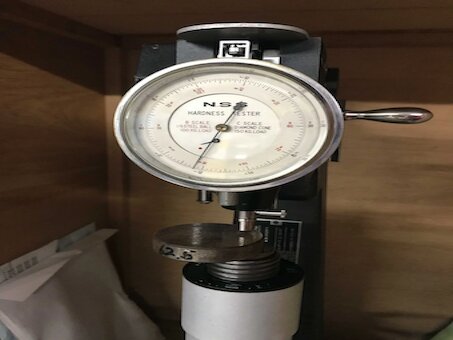
Measured on the Rockwell scale, edge hardness typically ranges from 50 to 70 HRC for industrial blades. Higher hardness levels provide better wear resistance but may reduce toughness. Materials like tungsten carbide offer exceptional hardness, suitable for cutting tough materials. Cryogenic treatment enhances edge hardness by refining the blade’s microstructure. Eurotools employs advanced heat treatment processes to achieve optimal edge properties. Proper grinding ensures uniform hardness along the blade’s edge. Edge hardness also affects cutting efficiency; harder edges require less frequent sharpening. However, excessive hardness can lead to chipping in high-impact applications. Coatings like PVD or CVD improve surface hardness without sacrificing toughness. Edge hardness must be balanced with material type and cutting speed for optimal performance. Regular inspections ensure that the blade maintains its designed hardness. Eurotools offers solutions tailored to specific applications, balancing hardness and durability. Advances in material science enable the development of ultra-hard edges for specialized tasks. Proper maintenance, including regrinding, preserves edge hardness over time. Operators must ensure that the blade’s hardness matches the cutting requirements. Eurotools provides detailed guidelines for selecting blades based on edge hardness. Understanding edge hardness helps clients optimize performance and reduce costs. With proper care, hardened edges deliver long-lasting, high-quality results.

