


Blade Angle
The blade angle refers to the degree at which a blade’s edge is sharpened. It influences the sharpness, durability of the cutting tool.
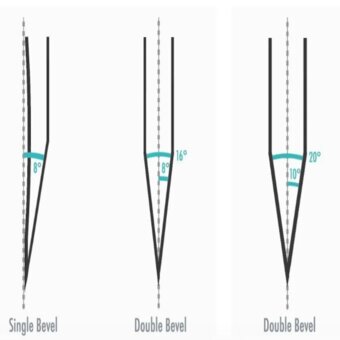
A small angle (e.g., 15 degrees) offers sharpness for soft materials like paper but can wear out quickly. Larger angles (e.g., 45 degrees) provide durability for harder materials like metal. Industrial applications often require a balance between these extremes. Compound angles, combining steep and shallow slopes, are used for multipurpose blades. Achieving precise blade angles requires advanced grinding techniques. Material composition also dictates the optimal angle; for example, tungsten carbide allows for sharper edges than steel. The blade angle directly affects cutting resistance, with sharper angles requiring less force. However, sharper angles are more prone to chipping under high pressure. Regular maintenance ensures the blade retains its original angle for consistent performance. Modern blade designs incorporate adjustable angles for diverse applications. Eurotools’ experts assist clients in choosing the best angle for their operations. Innovations in cryogenic treatment help maintain blade geometry over time. Improper angles can lead to inefficiency, increased wear, and safety risks. Automation in grinding processes ensures consistency across production batches. The choice of angle impacts not only cutting quality but also energy consumption. Eurotools focuses on optimizing blade angles to enhance productivity and reduce operational costs. Selecting the correct blade angle ensures efficient material handling, minimal waste, and longer tool life.

